Copywriting frameworks are fixed structures, such as problem plus solution or before plus after, that force the elements a converting headline needs into place. The seven frameworks below cover almost every SaaS headline that works.
Why do copywriting frameworks work?
A framework makes you include the parts an effective headline needs. Without one, you stare at a blank page, write something vague and hope it works.
With a framework, you fill in a structure instead, and the structure pushes you toward specifics. The best known one, AIDA (attention, interest, desire, action), maps a whole ad; the seven below work at headline size.
For 30 more fill-in templates sorted by funnel stage, use our headline formulas.
What is the problem-awareness framework?
This framework names the problem before it presents the solution. Readers who have the problem feel recognized.
Structure: "[Problem] is [consequence]. Here's how to [solution]."
Example: "Bad onboarding is killing your retention. Here's how to fix it in 30 days."
Use it for audiences who already know they have the problem. They read the first half, think "that's me," and are ready to hear the solution.
What is the transformation framework?
The transformation framework shows the before and after, so the reader can see the change.
Structure: "Turn [problem state] into [outcome state]."
Example: "Turn your onboarding chaos into customer loyalty."
It works when the change is dramatic and specific. "Turn chaos into loyalty" is more compelling than "turn bad into good."
What is the curiosity gap framework?
A curiosity gap headline implies there's something the reader doesn't know, and that creates tension.
Structure: "The real reason [common phenomenon] is [unexpected outcome]."
Example: "The real reason your headlines aren't converting."
Use it only when you have a specific, surprising answer. If your content can't deliver what the headline implies, pick another framework.
What is the command framework?
A command tells the reader what to do, which creates urgency.
Structure: "[Action] before [consequence]."
Example: "Fix your headlines before your traffic goes to waste."
It suits decision-stage audiences. They're ready to act and only need you to tell them what to do.
What is the social proof framework?
Social proof borrows credibility from others, which makes the decision feel less risky.
Structure: "[Number] [type of company] use [product] to [specific outcome]."
Example: "200+ SaaS teams use our onboarding tool to cut churn."
You need proof that is specific and verifiable. Named companies and specific outcomes are the most credible.
What is the specificity framework?
This framework runs on numbers and details, because specifics make a claim credible.
Structure: "[Specific action] by [specific amount] in [specific timeframe]."
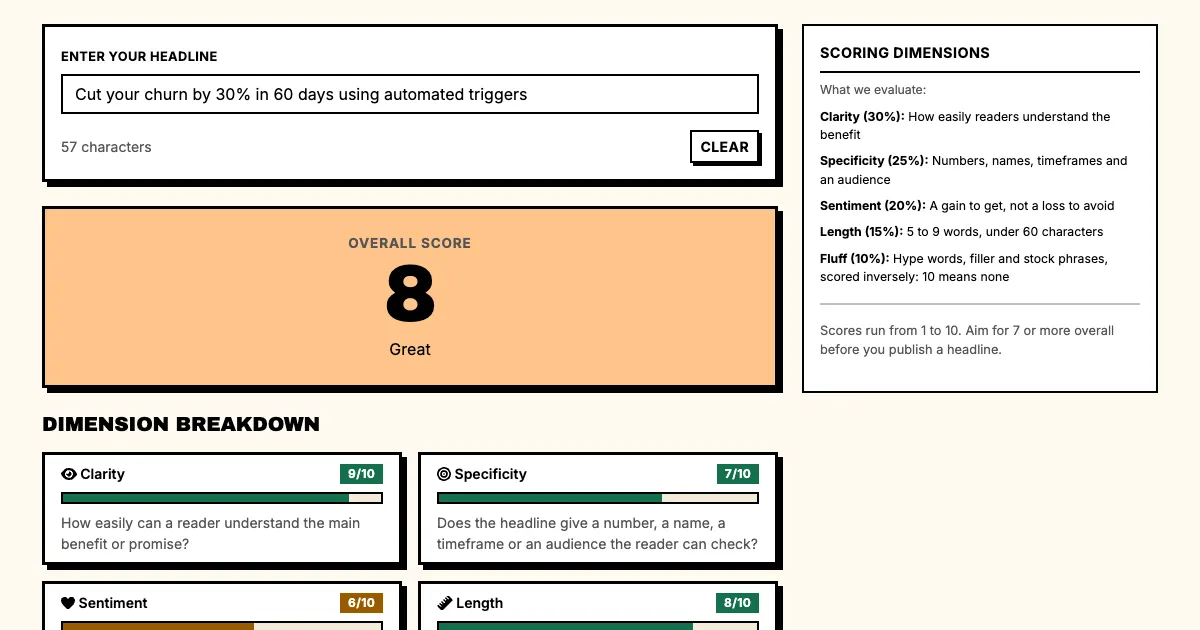
Example: "Cut your churn by 30% in 60 days using automated triggers."
Only use it when you have data to back up the numbers.
What is the contrast framework?
A contrast headline sets two approaches side by side, and the difference makes your point clear.
Structure: "Why [common approach] fails (and what to do instead)."
Example: "Why A/B testing headlines without data fails (and what to do instead)."
It needs a clear alternative to point at. Besides saying what you do, the headline explains why the alternative doesn't work.
Can you combine copywriting frameworks?
The best headlines often combine frameworks. A curiosity gap headline, for example, can also be specific.
Example: "The real reason you're losing 30% of customers to bad onboarding"
This combines curiosity gap (the real reason) with specificity (30% of customers).
FAQ: Copywriting frameworks
Q: Which framework should I start with?
A: The one that matches your content: problem-awareness for educational content, command for decision content, and social proof when you have credible evidence.
Q: Can I combine frameworks?
A: Yes. The best headlines combine two or three frameworks, as long as each one supports the same core message.
Q: How do I know which framework works?
A: Test them. Write headlines with three different frameworks and measure which one drives the most engagement.
What should you do now?
- Pick a piece of content.
- Write headlines using three different frameworks.
- Test each headline against your current headline.
- Track which framework drives the most engagement.
Engagement also depends on where the headline appears, which our guide to content distribution covers channel by channel. For templates and tools beyond these seven, browse our list of copywriting resources.
A framework gives you a structured first draft. Keep refining from there, the way our five headline rewrites turn weak drafts into specific ones.
Sources
Generate headlines with these frameworks in Punchd's AI headline generator: one punch writes 20 headlines.