Clickbait headlines win a click with a promise the page does not keep; conversion copy wins the click with a specific promise the page delivers. The line between them is specificity and follow-through.
What is clickbait?
Clickbait is copy that gets clicks without delivering value. It pulls the levers of copywriting psychology, such as curiosity and the fear of missing out, and skips the substance that would earn the click.
What makes copy clickbait is the broken promise, whatever the format. "The one thing" gets clicks, and so does "The one thing that will transform your business." The problem starts when "the one thing" turns out to be generic advice that appears in every article.
Clickbait is easy to recognize in retrospect: the content doesn't match the headline and the reader feels tricked. That feeling is what destroys trust.
What is conversion copy?
Conversion copy gets clicks by making a specific, credible promise. The headline opens a curiosity gap and the content closes it.
"The onboarding mistake that's costing you 30% of signups" is conversion copy if the content explains the specific mistake and how to fix it. It's clickbait if the content gives generic advice like "improve your onboarding."
In conversion copy the promise is kept, and the reader gets what they came for.
What separates clickbait headlines from conversion copy?
Specificity is the line between clickbait and conversion copy.
Vague: "The real reason your headlines aren't working"
Specific: "The real reason your headlines aren't working: you're writing for Google instead of humans"
The vague version raises a general curiosity and delivers vague advice. The specific version raises a specific curiosity and delivers a specific answer.
When you write a headline that implies a revelation, ask: "What specific thing am I promising?" If you can't answer that specifically, you're writing clickbait.
What do clickbait and conversion copy look like side by side?
Example 1
Clickbait: "This one headline formula changed everything"
Conversion copy: "This one headline formula doubled our email open rate"
"Changed everything" is vague. "Doubled our email open rate" is a specific claim the reader can verify.
Example 2
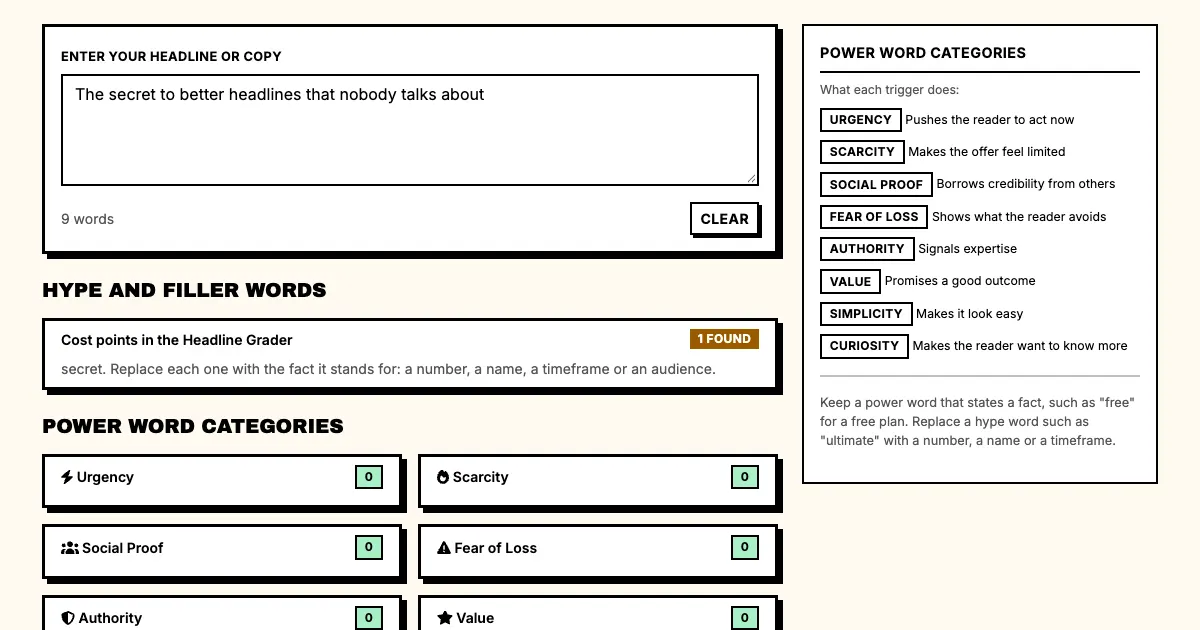
Clickbait: "The secret to better headlines that nobody talks about"
Conversion copy: "The headline formula most SaaS companies ignore (and why it still works)"
"Nobody talks about" is vague and sounds suspicious. "Most SaaS companies ignore" is specific and implies a reason, and the headline tells you what's being ignored and why that might be wrong.
Example 3
Clickbait: "What happened next will blow your mind"
Conversion copy: "How we cut churn by 40% in 30 days"
"Blow your mind" is hyperbole with nothing behind it. "Cut churn by 40% in 30 days" is a specific, impressive outcome the reader can verify.
What are the clickbait traps?
Trap 1: Vague numbers
"10 things" is a number. "10 headline formulas that work in B2B SaaS" is specific. Numbers create structure, but a vague number makes readers suspicious.
Trap 2: Hyperbolic language
"Life-changing," "game-changing," and "mind-blowing" are empty superlatives. They promise intensity and nothing specific, so the reader expects magic and gets mediocrity. Paste your draft into the free power word checker to catch hype words like these before you publish.
Trap 3: Implied secrets
"The secret to X" implies hidden knowledge. If the knowledge is well known ("The secret to writing better headlines is specificity"), the headline makes a false promise. Save "secret" for knowledge that really is hidden.
Trap 4: Questions without answers
"Is your onboarding secretly killing your retention?" is a good question. If the content explains exactly what "secretly killing" means and provides a fix, it's conversion copy; if it gives generic advice, it's clickbait.
Our guide to negative vs positive headlines covers when a loss frame like "killing your retention" earns its place.
How do you write conversion copy instead?
Step 1: Make the promise specific
Name exactly what the reader will learn: "3 specific headline formulas that doubled our open rate" instead of "better headlines."
Step 2: Verify the promise
Before you publish, ask: "Does the content actually deliver on this headline?" If the answer is no, rewrite the headline or rewrite the content.
The same check applies to the button under the headline. If you draft buttons with one of the CTA generator tools, check each line against the page it leads to.
Step 3: Be honest about limitations
"Cut churn by 40% in 30 days" is strong if true. If it only works for some businesses, say so. Being honest about the limits builds trust, and overpromising destroys it.
Step 4: Test with readers
Show your headline to five people in your target audience and ask: "What do you expect to learn from this headline?" Compare their expectations to what the content delivers.
If there's a gap, either the headline is overselling or the content is underdelivering.
FAQ: Clickbait vs. conversion copy
Q: Is curiosity gap copy always clickbait?
A: No. It becomes clickbait when the content doesn't answer the implied question. "The real reason your headlines aren't converting" is a curiosity gap: it's conversion copy if the content explains the specific reason with actionable advice, and clickbait if the content gives generic advice.
Q: Can I use dramatic language without being clickbait?
A: Yes, if specifics back up the drama. "This framework cut our churn in half" is dramatic and specific; "This framework will change everything" is dramatic and vague.
Q: How do I know if my headline is overselling?
A: Show it to five people in your target audience and ask what they expect to learn or experience. Compare their expectations to the actual content. If the gap is large, your headline is overselling.
What should you do now?
- Find five headlines on your site.
- For each headline, write one sentence describing exactly what the content delivers.
- Compare the delivery to the headline. Is the gap large?
- Rewrite any headlines that oversell.
- Test the rewritten headlines against the originals.
When you rewrite, be more specific than feels comfortable.
Sources
- Wikipedia: Clickbait
- Google Search Central: creating helpful content
- Loewenstein: The Psychology of Curiosity (PDF)
Check if your headlines sound like clickbait. Grade your headlines: get scores on clarity, specificity, sentiment, length and fluff.