A curiosity gap headline tells the reader that an answer exists and withholds it until the click. It works without becoming clickbait when the answer on the page is worth the click.
What is a curiosity gap?
A curiosity gap is the space between what your reader knows and what they want to know. A curiosity gap headline opens that space on purpose, so the reader feels the answer to an implied question is worth getting.
Journalism has used the technique for over a century. Tabloid headlines like "The Secret Scandal Everyone's Talking About" are curiosity gaps, and so are serious magazine headlines like "The Real Reason Traffic Jams Happen."
What separates journalism from clickbait is whether the promise is kept. A curiosity gap headline works when the content answers the implied question; when the content doesn't, the headline is clickbait.
How do curiosity gaps work?
Curiosity gaps trigger the instinct to seek information: when you sense a gap in what you know, your brain wants to fill it.
The gap creates tension, and resolving it feels satisfying. A good curiosity gap headline creates enough tension that the reader clicks, and the content delivers enough value that the reader trusts the source.
The gap has to be specific enough to feel real. "The truth about everything" is too vague. With "The real reason your headlines aren't converting," the reader can picture exactly what information they're missing.
What types of curiosity gap headlines are there?
The revelation gap
This gap implies that something has been hidden or unknown.
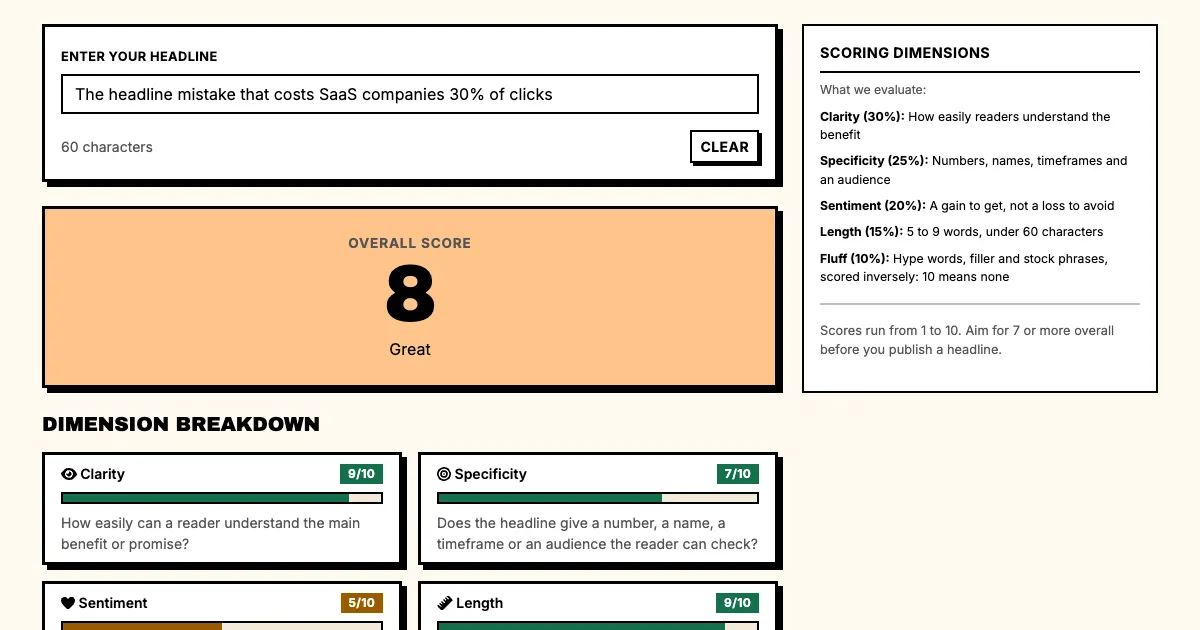
Example: "The headline mistake that costs SaaS companies 30% of clicks"
The headline hints at a hidden mistake causing hidden losses, and the reader clicks to find out what the mistake is.
It works when you have a specific, surprising revelation. "The real reason" works because most readers assume they already know the reason.
The contrast gap
It suggests a difference between appearance and reality.
Example: "Why your best-performing A/B test is actually hurting you"
The headline says performance and harm can coexist, and the reader wants to understand how.
The contrast has to be counterintuitive. Something that performs well and still causes harm is surprising, and surprise creates curiosity.
The number gap
It implies a specific quantity the reader doesn't know.
Example: "The 7 headline patterns that doubled our email open rate"
There are exactly 7 patterns, and the reader wants to know which ones.
The number should be specific and the outcome compelling. "The 7 things" is overused; a specific outcome is what makes the number meaningful.
The process gap
It hints at a sequence the reader doesn't know.
Example: "How we cut churn by 40% using a single onboarding email"
The headline suggests a process others don't know about, and the reader wants to learn it.
Use it when the process is surprising or counterintuitive. A "single onboarding email" is surprising because most people assume more emails are needed.
The identity gap
It implies there's something the reader doesn't know about themselves.
Example: "The real reason you keep writing boring headlines"
The reader is told they're doing something wrong without knowing it, and they want to know what.
The reader has to recognize the implied flaw in themselves. "The reason you keep writing boring headlines" works because the reader has written boring headlines.
A question can open any of these gaps too. Question headlines follow the same rule: they work when the page answers them.
How is a curiosity gap different from clickbait?
The same headline, "The real reason your headlines aren't converting", can be either. It is a curiosity gap when the content explains the real reason with specific, actionable advice. It is clickbait when the content gives vague advice like "write better headlines" without explaining what "better" means.
The first reader leaves satisfied. The second leaves frustrated, and frustrated readers don't come back.
Our guide to clickbait headlines puts more of these pairs side by side.
What are the common curiosity gap mistakes?
Mistake 1: Vague gaps
"The truth about SaaS" is too vague. The reader can't picture what information they're missing, so the headline confuses them instead of making them curious. Our headline rewrites show how to turn a vague line into a specific one.
Mistake 2: Overselling the gap
"The most important thing you'll ever read about headlines" sounds dramatic but creates skepticism. If the gap is this big, why haven't people already learned this?
Mistake 3: Not delivering
This is the biggest mistake. The content that follows must answer the implied question specifically, because general advice doesn't close a specific gap.
Mistake 4: Overusing gaps
If every headline promises a revelation, none of them feels special. Save curiosity gaps for your most important content, and on a landing page state the benefit outright (see benefit vs feature headlines).
FAQ: Curiosity gap headlines
Q: Is a curiosity gap headline clickbait?
A: Only when the page does not close the gap. If the answer is on the page and worth the click, it is a curiosity gap; if not, it is clickbait.
Q: Do curiosity gaps work in B2B?
A: Yes, when the gap is about a business outcome ("the pricing mistake that costs SaaS teams 12% of revenue").
Q: Where should I use them?
A: Blog titles, email subject lines and social posts. Landing page headlines should state the benefit outright.
What should you do now?
- Identify three pieces of your best content.
- For each piece, write a curiosity gap headline.
- Write three alternative headlines without curiosity gaps, or let the AI headline generator draft a batch to choose from.
- Show each headline to five people in your target audience.
- Ask: "Does this make you want to read more?" and "Do you trust that the content will deliver on the headline?"
Don't open a gap your content can't fill.
Sources
- Loewenstein: The Psychology of Curiosity (PDF)
- Wikipedia: Clickbait
- Nielsen Norman Group: headings as pickup lines
Want to check if your headlines feel like clickbait? Grade your headlines in seconds: hype words such as "secret" and "revealed" cost points.