Content distribution means putting a headline in front of the audience that needs it, through owned, earned and paid channels. A good headline with no distribution gets no clicks, so plan the channels before you write.
Why does distribution matter more than the headline?
A great headline that nobody sees is worthless. A mediocre headline in front of the right audience is valuable.
Distribution is the work of getting your headlines in front of the people who need to see them. Most SaaS teams spend too much time writing headlines and too little time distributing them. Knowing the channel first also tells you how to word the headline, as the search example further down shows.
What are the three distribution layers?
Layer 1: Owned media
Owned media is the audience you control: your email list, your website, your blog.
This is where your best content lives, so write headlines that serve the audience you already have. They respond to headlines that address their specific challenges.
To distribute through it, email your list when you publish, feature new content on your homepage and link to new content from existing content. Before you send anyone to a page, run it through a 5-second test so the click lands on something clear.
Layer 2: Earned media
Earned media is the audience you attract through others: press coverage, guest posts, social shares.
It's harder to control but has higher credibility. Headlines for earned media should be easy to share and quote.
To earn it, guest on podcasts, write for industry publications and create content that other people want to link to.
Layer 3: Paid media
Paid media is the audience you buy: ads, sponsored content, influencer partnerships.
Its headlines have to work under pressure. You're paying per click, so every headline needs to earn its cost.
Test headlines with small ad budgets before you scale, and focus on headlines with high CTR to reduce cost per click. You need enough headline ideas to make those tests worth running, so write a batch per channel instead of one.
What does a distribution-first workflow look like?
Most teams write headlines first and think about distribution afterwards. The best teams reverse the order:
- Define your audience. Who are you writing for, and where do they spend time online?
- Choose your distribution channel. LinkedIn, email or search? Each channel has different headline requirements.
- Write for the channel. A LinkedIn headline is different from an email subject line, so write for where it will appear.
- Test and iterate. Track which headlines perform on which channels; that's how distribution teaches you what works.
How do headlines change per channel?
Start from one core headline and adapt it for each channel. Our guide to headline variations shows the method step by step.
LinkedIn audiences respond to professional content with personal insights. Headlines that name specific outcomes and include contrarian takes perform well.
Best format: "[Contrarian insight] about [professional topic]"
Inboxes are crowded. Questions and curiosity gaps get opens, and specific numbers add credibility.
Best format: "Are you making this [mistake]?"
Search
Search headlines compete on relevance and specificity. Include your primary keyword and a specific outcome.
Best format: "[Keyword]: [specific outcome] in [timeframe]"
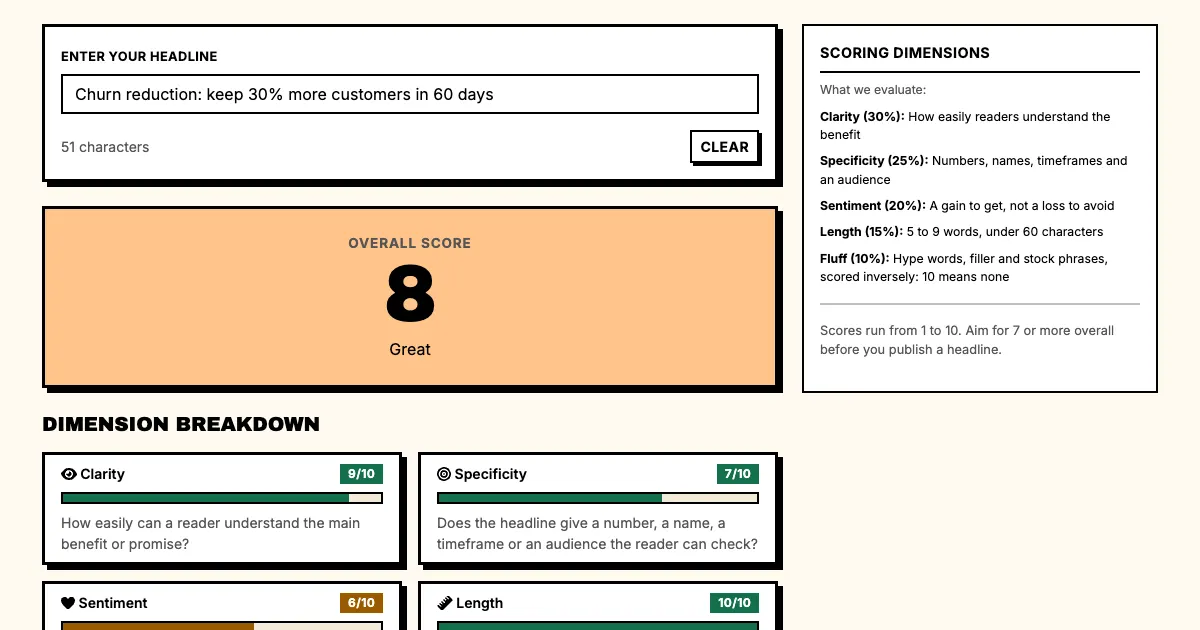
Example: "Churn reduction: keep 30% more customers in 60 days" says far more to a searcher than "Churn Reduction Tips."
Social media
Social headlines have to make people curious enough to stop scrolling. Questions and bold claims work well.
Best format: "[Bold claim]: [specific data]"
FAQ: Content distribution
Q: Should I distribute the same headline across all channels?
A: No. Each channel has different requirements, so write a headline for each channel that carries the same core message.
Q: How do I know which channels to prioritize?
A: Start where your audience already spends time. If they're on LinkedIn, prioritize LinkedIn, and test other channels with small investments.
Q: How do I measure distribution effectiveness?
A: Track click-through rate by channel, A/B test headlines on each channel and compare the results to industry benchmarks.
What should you do now?
- Define your top three distribution channels.
- Write three headlines specifically for each channel.
- Publish on your owned channels first.
- Test paid distribution on your best-performing headlines.
- Track which channels drive the most engagement.
Sources
Need headlines for each channel? The AI headline generator writes 20 from one brief, and the free headline grader scores each one on clarity, specificity, sentiment, length and fluff.